Community Engagement and Impact Management
Community Engagement and Impact Assessment
Before developing any construction site, BES conducts community impact assessments and environmental identification procedures and establishes management mechanisms in accordance with the ISO 14001:2015 Environmental Management System. All development projects are required to hold pre-construction briefing sessions, covering 100% of project sites. In 2025, BES conducted a total of 22 community engagement events for urban renewal projects.
In response to concerns and feedback raised during these briefing sessions, BES adjusts construction plans where feasible. Such measures may include construction schedule management, environmental monitoring, and pedestrian pathway planning, thereby strengthening trust and consensus with local residents.
For public construction projects, environmental assessments are conducted by project owners, and construction activities commence only after all applicable regulatory requirements have been satisfied. For privately developed projects, BES conducts neighboring property condition assessments, traffic impact assessments, hazard impact assessments, and other relevant evaluations.
Based on assessments conducted at all operating locations and construction sites during 2025, BES did not identify any significant adverse impacts on local communities. As of the end of the reporting period, no major community impact incidents, such as protests or formal complaints recognized by competent authorities, had been reported.
BES will continue to uphold its commitment to being a good neighbor by fostering positive community relationships while ensuring both construction safety and environmental quality.
Environmental Impact Identification and Assessment
To effectively meet environmental management requirements, BES's OSH Center at headquarters oversees all construction projects. Every project is required to implement the ISO 14001 Environmental Management System, thereby enhancing compliance with environmental regulations among project personnel and reducing the likelihood of penalties resulting from environmental non-conformities.
Designated assessment personnel (or assessment teams) conduct comprehensive identification and evaluation of both direct and indirect environmental aspects. These assessments cover office operations, construction materials, suppliers, stakeholder groups, contractors, construction activities, project acceptance procedures, waste management capacity, energy and resource utilization, as well as future development considerations. The objective is to achieve continuous improvement while ensuring compliance with applicable environmental laws and regulations.
In addition, BES conducts construction inspections and ecological assessments in accordance with regulatory requirements to ensure the effective implementation of environmental protection measures and to minimize potential environmental impacts.
 Community Communication Mechanism
Before commencing public construction projects and urban renewal developments, BES conducts rigorous site selection processes and holds pre-construction briefing sessions. These sessions inform neighboring residents about the overall construction plan, fostering mutual communication and coordination to build strong trust. If residents have suggestions or concerns during construction, they may communicate with BES through designated contact channels or face-to-face discussions.
In 2025, BES held a total of 22 urban renewal briefing sessions, demonstrating its commitment to urban renewal and public service. To provide landowners with housing that better meets market demands and offers greater long-term stability, BES has completed three urban renewal reconstruction projects damaged by salt-contaminated sand in the Minsheng Community of Songshan District, Taipei City. One additional project remains under construction. BES continues its efforts to redevelop aging and seawater-damaged buildings, providing landowners and neighboring residents with safer and more secure living environments.
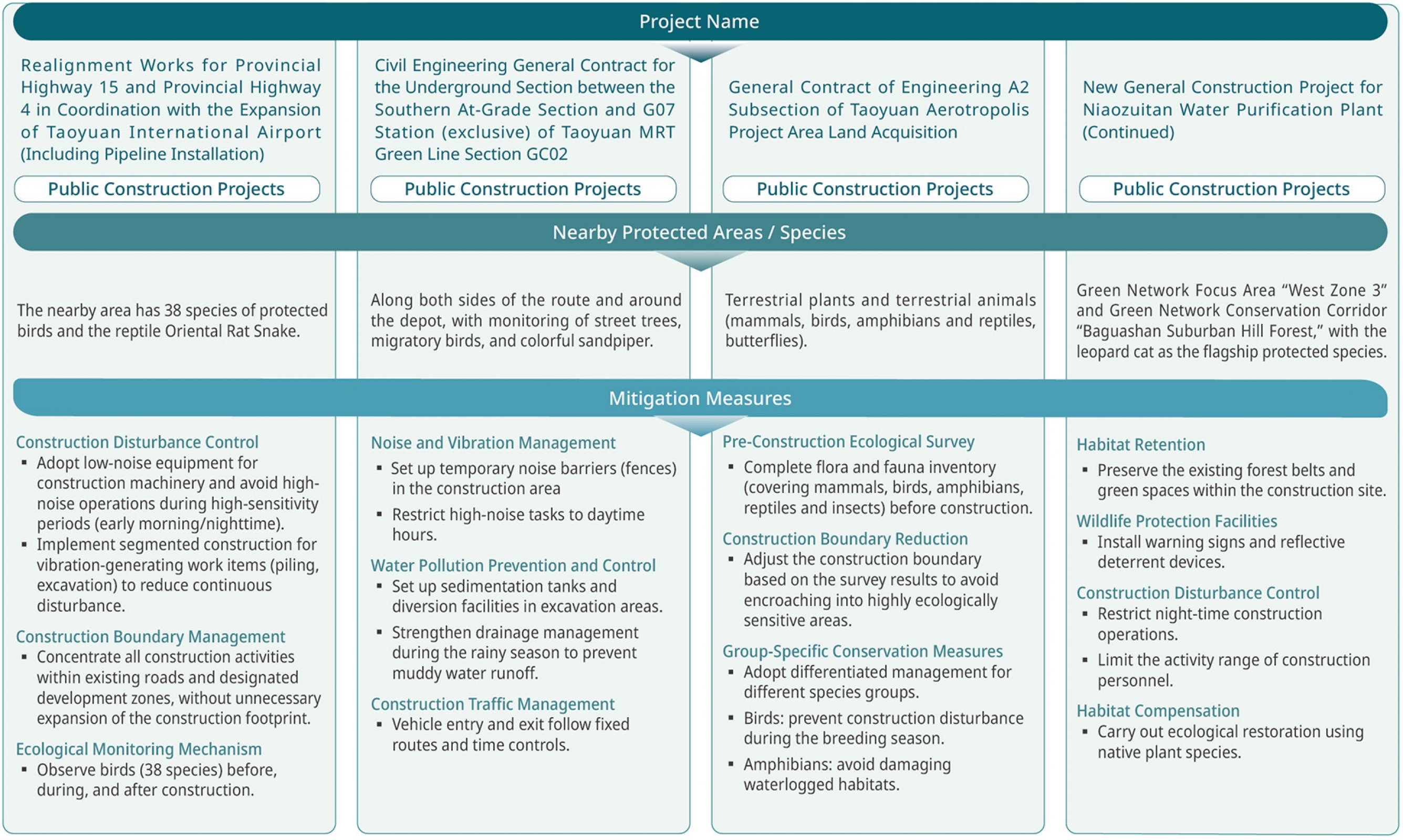
Project Nearby Ecology and Mitigation Measures
 Ecological Education and Training

Social Investment and Community Engagement
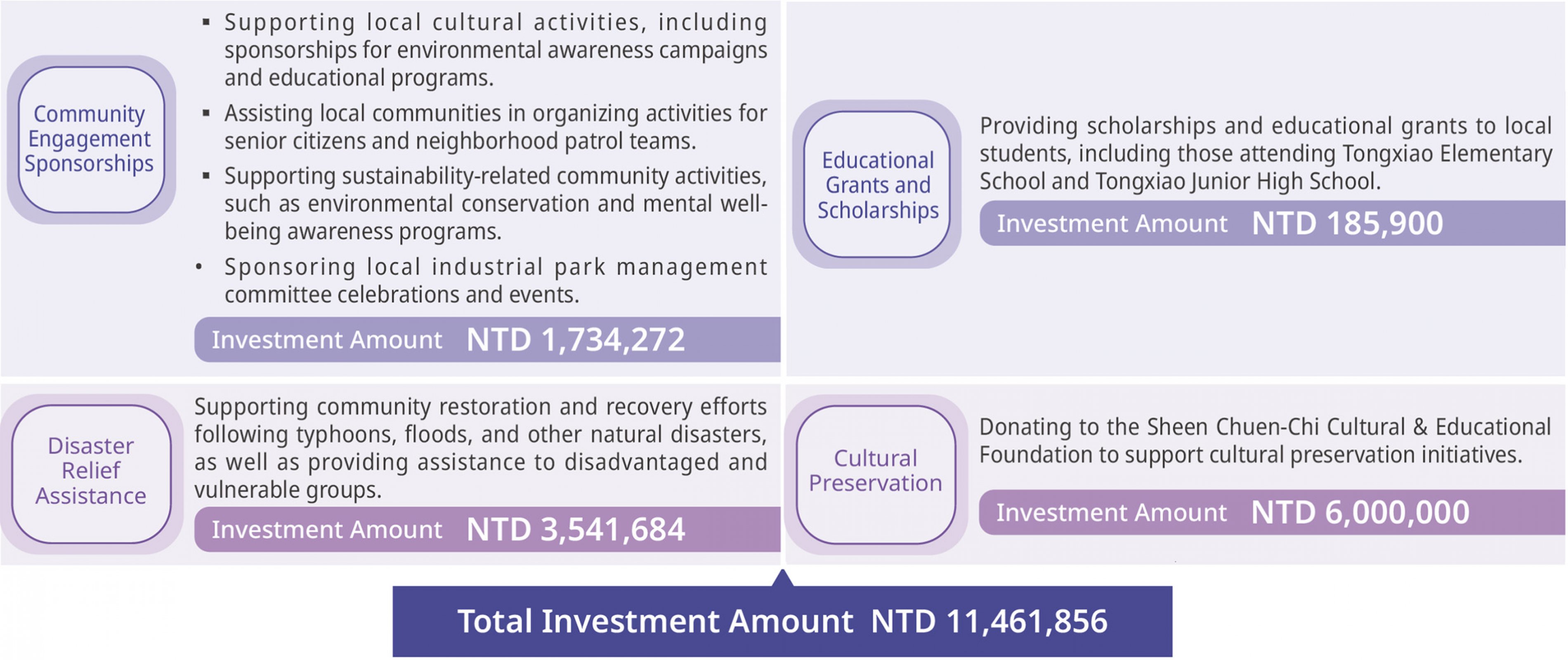
BES actively responds to the United Nations Sustainable Development Goals (SDGs) and the Taiwan Sustainable Development Goals established by the National Council for Sustainable Development under the Executive Yuan. In 2025, BES invested a total of NTD 11.46 million in social welfare initiatives, covering 4 major categories: community engagement sponsorships, disaster relief assistance, educational grants and scholarships, and cultural preservation.
Community Engagement and Impact Management
Community Engagement and Impact Assessment
Before developing any construction site, BES conducts community impact assessments and environmental identification procedures and establishes management mechanisms in accordance with the ISO 14001:2015 Environmental Management System. All development projects are required to hold pre-construction briefing sessions, covering 100% of project sites. In 2025, BES conducted a total of 22 community engagement events for urban renewal projects.
In response to concerns and feedback raised during these briefing sessions, BES adjusts construction plans where feasible. Such measures may include construction schedule management, environmental monitoring, and pedestrian pathway planning, thereby strengthening trust and consensus with local residents.
For public construction projects, environmental assessments are conducted by project owners, and construction activities commence only after all applicable regulatory requirements have been satisfied. For privately developed projects, BES conducts neighboring property condition assessments, traffic impact assessments, hazard impact assessments, and other relevant evaluations.
Based on assessments conducted at all operating locations and construction sites during 2025, BES did not identify any significant adverse impacts on local communities. As of the end of the reporting period, no major community impact incidents, such as protests or formal complaints recognized by competent authorities, had been reported.
BES will continue to uphold its commitment to being a good neighbor by fostering positive community relationships while ensuring both construction safety and environmental quality.
Environmental Impact Identification and Assessment
To effectively meet environmental management requirements, BES's OSH Center at headquarters oversees all construction projects. Every project is required to implement the ISO 14001 Environmental Management System, thereby enhancing compliance with environmental regulations among project personnel and reducing the likelihood of penalties resulting from environmental non-conformities.
Designated assessment personnel (or assessment teams) conduct comprehensive identification and evaluation of both direct and indirect environmental aspects. These assessments cover office operations, construction materials, suppliers, stakeholder groups, contractors, construction activities, project acceptance procedures, waste management capacity, energy and resource utilization, as well as future development considerations. The objective is to achieve continuous improvement while ensuring compliance with applicable environmental laws and regulations.
In addition, BES conducts construction inspections and ecological assessments in accordance with regulatory requirements to ensure the effective implementation of environmental protection measures and to minimize potential environmental impacts.
 Community Communication Mechanism
Before commencing public construction projects and urban renewal developments, BES conducts rigorous site selection processes and holds pre-construction briefing sessions. These sessions inform neighboring residents about the overall construction plan, fostering mutual communication and coordination to build strong trust. If residents have suggestions or concerns during construction, they may communicate with BES through designated contact channels or face-to-face discussions.
In 2025, BES held a total of 22 urban renewal briefing sessions, demonstrating its commitment to urban renewal and public service. To provide landowners with housing that better meets market demands and offers greater long-term stability, BES has completed three urban renewal reconstruction projects damaged by salt-contaminated sand in the Minsheng Community of Songshan District, Taipei City. One additional project remains under construction. BES continues its efforts to redevelop aging and seawater-damaged buildings, providing landowners and neighboring residents with safer and more secure living environments.
Project Nearby Ecology and Mitigation Measures
Ecological Education and Training
Social Investment and Community Engagement
BES actively responds to the United Nations Sustainable Development Goals (SDGs) and the Taiwan Sustainable Development Goals established by the National Council for Sustainable Development under the Executive Yuan. In 2025, BES invested a total of NTD 11.46 million in social welfare initiatives, covering 4 major categories: community engagement sponsorships, disaster relief assistance, educational grants and scholarships, and cultural preservation.